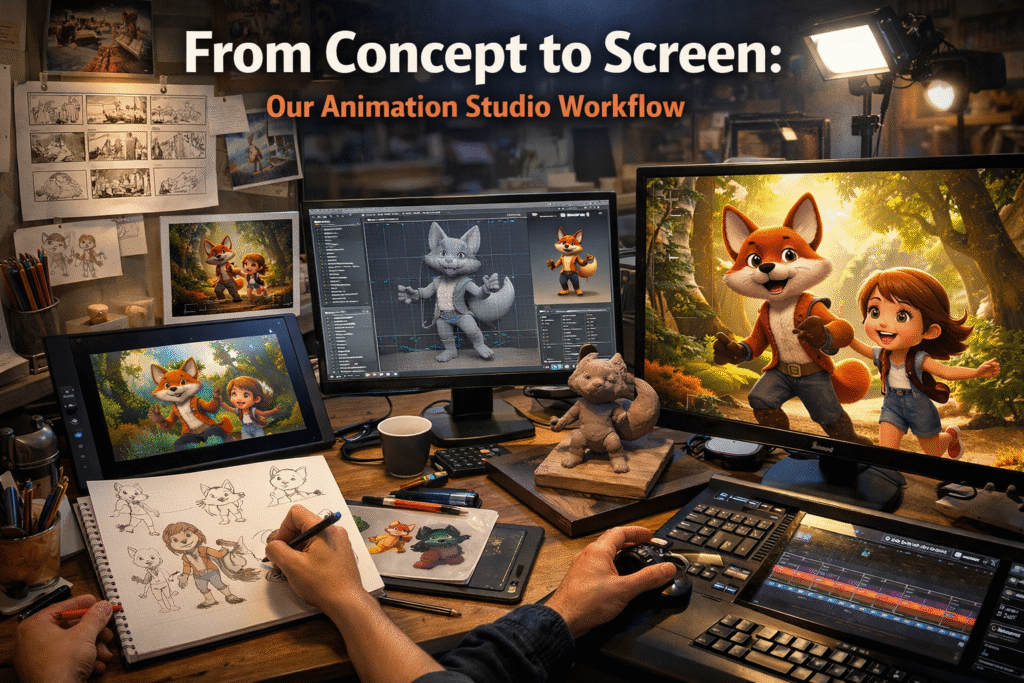
Behind every successful animation lies a clear process. Great visuals are not created by chance—they are the result of planning, creativity, collaboration, and technical expertise. Whether it’s a brand film, product animation, or visual storytelling project, a well-defined workflow ensures consistency, quality, and impact.
In this article, we walk through a professional animation studio workflow, showing how ideas move smoothly from concept to screen. This structured approach is followed by leading teams offering 3D animation services and trusted by brands working with an animation studio in new york and other global creative hubs.
Why a Structured Animation Workflow Matters
Animation is both creative and technical. Without a clear workflow, projects can suffer from delays, miscommunication, or inconsistent quality.
A strong workflow helps to:
- Align creativity with business goals
- Maintain brand consistency
- Reduce revisions and rework
- Deliver projects on time
- Ensure high-quality final output
This process-driven approach is essential for animations that boost engagement and strengthen brand identity.
Step 1: Understanding the Concept and Objectives
Every animation project starts with clarity. Before any design or animation begins, the studio focuses on understanding the idea behind the project.
This stage includes:
- Client discussions and discovery calls
- Understanding the brand, audience, and goals
- Defining the message and tone
- Identifying platforms and formats
Clear objectives at this stage ensure the animation supports marketing, branding, or communication goals—not just visuals.
Step 2: Scriptwriting and Story Development
Once the concept is clear, it is transformed into a story. Animation is storytelling at its core.
Key activities include:
- Writing a clear and engaging script
- Structuring the story flow
- Highlighting the problem, solution, and value
- Keeping the message simple and audience-focused
A strong script is the foundation of effective animation and plays a major role in how logo animation boosts brand identity and overall brand storytelling.
Step 3: Storyboarding and Visual Planning
Storyboarding is where ideas start to become visual. It acts as a blueprint for the entire animation.
This step involves:
- Sketching key scenes frame by frame
- Planning camera angles and transitions
- Visualizing motion and timing
- Aligning visuals with the script
Storyboards help clients visualize the final output early and ensure everyone is aligned before production begins.
Step 4: Design and Asset Creation
With the storyboard approved, the design phase begins. This is where the visual style is defined.
Design tasks include:
- Creating characters, icons, and environments
- Applying brand colors and typography
- Designing UI elements if needed
- Preparing assets for animation
For projects involving 3D animation services, this stage also includes 3D modeling, texturing, and environment creation.
Step 5: Animation and Motion Development
This is where the real magic happens. Designs are brought to life through motion.
Depending on the project, this includes:
- 2D animation for explainers and storytelling
- 3D animation for product visuals and realism
- Camera movement and scene transitions
- Timing and motion refinement
Professional studios carefully balance motion so it feels natural, engaging, and aligned with brand personality.
Step 6: Lighting, Effects, and Visual Enhancement
For 3D projects, lighting and effects play a major role in visual impact.
This stage focuses on:
- Lighting setup for mood and realism
- Shadows, reflections, and depth
- Visual effects and transitions
- Polishing the overall look
High-quality lighting and effects are often what separate amateur work from studio-level output.
Step 7: Sound Design and Voiceover Integration
Animation becomes more powerful when combined with sound.
This includes:
- Voiceover recording and syncing
- Background music selection
- Sound effects for motion and transitions
Good audio enhances emotion, clarity, and professionalism—making the animation more immersive.
Step 8: Review, Feedback, and Refinement
Before final delivery, the animation goes through multiple review rounds.
This phase involves:
- Internal quality checks
- Client feedback and revisions
- Fine-tuning motion and timing
- Ensuring brand consistency
A collaborative feedback process ensures the final result meets expectations without compromising quality.
Step 9: Final Rendering and Delivery
Once approved, the animation is rendered in required formats.
Deliverables may include:
- Videos for web and social media
- High-resolution files for presentations
- Short edits or cutdowns
- Platform-optimized versions
Professional studios ensure compatibility across devices and platforms.
Why Brands Trust Professional Animation Studios
A structured workflow is one of the main reasons brands prefer working with experienced studios.
A professional team offers:
- Clear communication
- Predictable timelines
- Creative and technical expertise
- Consistent output quality
Many global brands collaborate with an animation studio in new york because of exposure to international standards, creative innovation, and proven workflows.
Industries That Benefit from a Strong Animation Workflow
This process-driven approach is used across industries such as:
- Technology and SaaS
- Healthcare and medical
- Real estate and architecture
- Education and e-learning
- Manufacturing and engineering
Any brand focused on visual communication benefits from a reliable animation workflow.
Key Benefits of a Professional Animation Workflow
- Smooth project execution
- Reduced revisions and delays
- High-quality visual storytelling
- Stronger brand identity
- Scalable content creation
- Better return on investment
FAQs
Why is an animation workflow important?
An animation workflow ensures clarity, efficiency, quality control, and consistent results from concept to final delivery.
How do 3D animation services fit into this workflow?
3D animation services are integrated during design, modeling, animation, lighting, and rendering stages for realistic and immersive visuals.
How long does a typical animation project take?
Timelines vary by complexity, but a structured workflow helps deliver projects on time without compromising quality.
Can clients be involved during the process?
Yes. Feedback is usually taken at key stages like script, storyboard, and animation previews.
Why choose an animation studio in New york?
An animation studio in new york often brings global creative exposure, strong storytelling expertise, and proven workflows suited for competitive markets.
Final Thoughts
From concept to screen, animation is a journey of ideas, creativity, and precision. A well-defined studio workflow ensures that every project is visually compelling, strategically aligned, and professionally delivered.By following a structured process and leveraging expert 3D animation services, a professional animation studio transforms ideas into impactful visuals—while consistently helping brands communicate clearly and build stronger brand identity.