
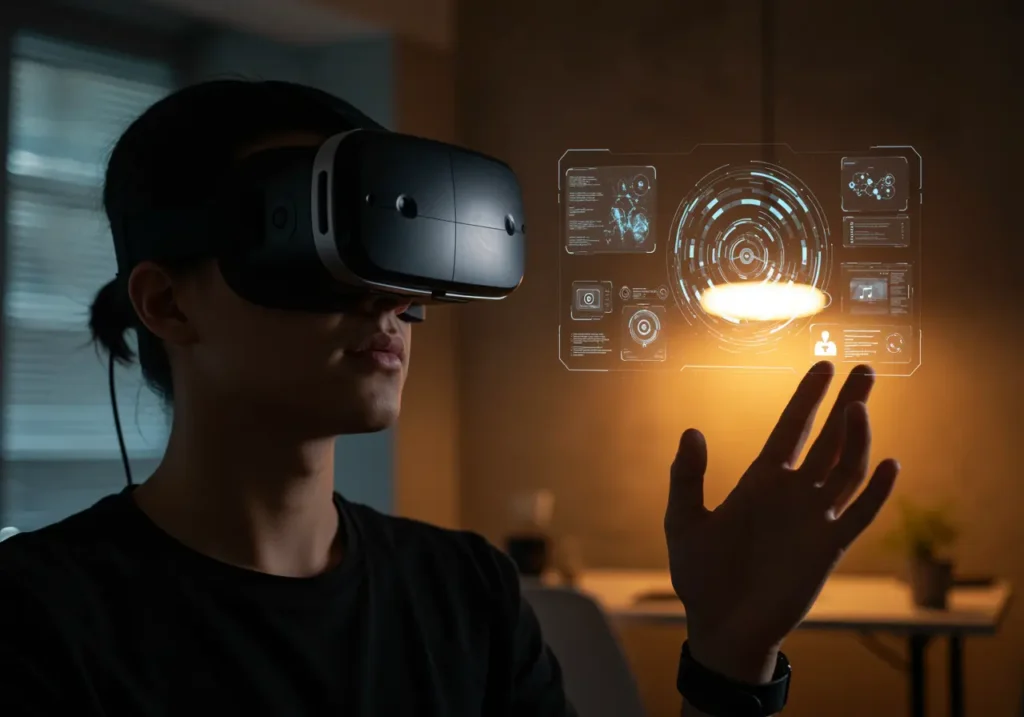
Marketing is constantly evolving, but some changes completely redefine how brands connect with people. One such shift is happening right now with AR/VR Experience–driven marketing. Augmented Reality (AR) and Virtual Reality (VR) are no longer limited to gaming or tech demos. They are becoming powerful tools for storytelling, engagement, and customer decision-making.
As brands look for deeper connections and better engagement, AR and VR are emerging as the next big marketing trend—supported strongly by 3D animation services, 2D animation services, and advanced visual storytelling.
Understanding AR and VR in Marketing
Before diving into the impact, it’s important to understand the basics.
- Augmented Reality (AR) overlays digital elements onto the real world using smartphones, tablets, or AR glasses.
- Virtual Reality (VR) creates a fully immersive digital environment using VR headsets.
Together, they create interactive and immersive AR/VR Experience solutions that allow users to engage with brands rather than just watch or read about them.
Why Traditional Marketing Is Losing Impact
Modern consumers are overloaded with ads. Banners, videos, and static visuals compete for attention every second.
Challenges brands face today:
- Low attention spans
- Ad fatigue
- Low engagement rates
- Difficulty explaining complex products
AR and VR address these problems by turning marketing into an experience, not just a message.
How AR/VR Experiences Are Transforming Marketing
1. Immersive Brand Storytelling
Stories are more powerful when people can step inside them. With AR and VR, brands can create immersive stories that users explore at their own pace.
Using 3D animation services, brands can:
- Build virtual environments
- Create interactive product stories
- Simulate real-life use cases
This level of immersion creates emotional connections that traditional ads cannot match.
2. Better Product Visualization
One of the biggest advantages of an AR/VR Experience is product visualization.
Brands can allow customers to:
- View products in 3D
- Rotate, zoom, and explore details
- See products in real-world environments using AR
This is especially effective for:
- Real estate walkthroughs
- Furniture and home décor previews
- Automotive and machinery demos
- Fashion and accessories
These experiences reduce hesitation and improve purchase confidence.
3. Higher Engagement and Time Spent
Interactive experiences naturally keep users engaged longer. Unlike passive content, AR and VR require participation.
Marketing benefits include:
- Increased session duration
- Higher brand recall
- Stronger emotional impact
- Improved conversion rates
This is why many brands combine AR/VR with 2D animation services for onboarding screens, tutorials, and guided interactions.
4. Personalised Marketing Experiences
AR and VR allow brands to personalize marketing like never before.
Examples include:
- Virtual try-ons based on user preferences
- Location-based AR campaigns
- Customized virtual showrooms
Personalisation makes marketing feel relevant and valuable rather than intrusive.
5. Strong Differentiation in Competitive Markets
Most brands are still experimenting with AR and VR. Early adopters stand out instantly.
An immersive AR/VR Experience positions a brand as:
- Innovative
- Tech-forward
- Premium
- Customer-focused
Many global brands work with advanced creative teams or an animation studio in New York to build high-quality immersive campaigns that match international standards.
Role of Animation in AR/VR Marketing
Animation is the backbone of AR and VR experiences.
- 3D animation services are used to create realistic environments, products, and interactions.
- 2D animation services support UI elements, transitions, instructions, and storytelling layers.
Without animation, AR and VR experiences would lack realism, clarity, and engagement.
Industries Leading the AR/VR Marketing Trend
AR and VR marketing is growing rapidly across multiple industries:
- Real estate and architecture
- Retail and e-commerce
- Healthcare and medical training
- Education and e-learning
- Travel and tourism
- Automotive and manufacturing
As technology becomes more accessible, adoption is accelerating.
Key Benefits of AR/VR Experiences in Marketing
- Creates memorable brand interactions
- Improves customer understanding
- Increases engagement and trust
- Reduces product return rates
- Supports premium brand positioning
- Works well with digital and physical campaigns
Challenges and How Brands Overcome Them
While AR and VR offer huge benefits, they require expertise and planning.
Common challenges:
- High-quality content creation
- User experience design
- Device compatibility
Brands overcome these by working with experienced animation and technology teams that understand both creativity and marketing strategy.
The Future of AR/VR in Marketing
The future of marketing is experiential. As devices become more affordable and platforms integrate AR features, immersive marketing will become mainstream.
Upcoming trends include:
- Web-based AR experiences
- Social media AR filters
- VR product launches
- AI-powered immersive content
- Integration with metaverse platforms
Brands investing today will be ahead of the curve tomorrow.
FAQs
What is an AR/VR Experience in marketing?
An AR/VR Experience allows users to interact with a brand through immersive digital environments or augmented real-world visuals, improving engagement and understanding.
How do 3D animation services support AR/VR marketing?
3D animation services create realistic models, environments, and interactions that form the core of AR and VR experiences.
Are 2D animation services used in AR/VR?
Yes. 2D animation services are often used for user interfaces, guides, icons, and instructional elements within AR/VR experiences.
Is AR/VR marketing suitable for small businesses?
Yes. Scalable AR solutions like web-based AR and simple product previews are becoming affordable for small and medium businesses.
Why work with an animation studio in New York?
An animation studio in New York often brings global creative expertise, advanced technology, and strategic storytelling skills for high-impact immersive campaigns.
Final Thoughts
AR and VR are not just trends—they represent a shift in how people experience brands. By turning marketing into an interactive journey, AR/VR Experience–based campaigns build trust, excitement, and long-term brand value.
When combined with strong 3D animation services, 2D animation services, and expert creative execution, AR and VR are shaping the future of marketing—one immersive experience at a time.